
To qualify for CEU credit, you must complete this course material in its entirety. The full course is designed to require a minimum of 1 hour 50 minutes of reading and study at a reasonable pace, plus the review questions at the end. Your time in each section is being monitored and recorded.
This course covers structural fumigation for Florida Category 7 certified operators across four lessons. By the end of the course you will be able to:
- Apply Florida's fumigation licensing, contract, notice, and recordkeeping requirements under Chapter 482.
- Explain sulfuryl fluoride chemistry and identify the target pests that fumigation controls.
- Carry out pre-fumigation structural preparation, PPE selection, and site-security requirements.
- Calculate dosage, monitor gas concentration and the CT factor, and clear a structure for safe re-entry.
These objectives are reviewed at the end of the final lesson.
Section 1: The Legal Framework Governing Structural Fumigation in Florida
Structural fumigation is one of the most heavily regulated activities in Florida pest control. The introduction of a toxic gas into an occupied-type structure — even a temporarily vacated one — carries inherent risks to applicators, to occupants who return, to neighbors, and to the broader environment. Florida's regulatory framework reflects this risk through layered requirements that govern who may fumigate, how contracts must be written, what notices must be given, what records must be kept, and how fumigation operations must be conducted from first customer contact through final clearance.
Every certified operator holding a Fumigation endorsement under Florida Chapter 482 is personally responsible for ensuring that every fumigation performed under their license complies with all applicable state and federal requirements. That responsibility cannot be delegated. Understanding the law is not optional — it is the foundation upon which every fumigation is built.
Florida Statute Chapter 482 — Structural Pest Control
Chapter 482 of the Florida Statutes is the primary state law governing structural pest control, including fumigation. The law defines fumigation in broad terms: any method of pest control that introduces a gas or vapor toxic to the target pest into an enclosed space to achieve lethal concentration throughout that space. This definition encompasses both structural tent fumigation of entire buildings and chamber fumigation of commodities or furniture — both of which are regulated under the same licensing framework.
The Fumigation License Category
Florida divides pest control licensing into categories that reflect distinct types of work. Fumigation is a separate certification category under Chapter 482. A certified operator who holds a general household pest (GHP) certification, a wood-destroying organism (WDO) certification, or any other category is not authorized to perform structural fumigation unless they also hold the Fumigation certification. The two most common examination pathways to the fumigation certification are:
- Category 7 — Fumigation: For certified operators who will direct or supervise all aspects of fumigation operations
- Category 7T — Fumigation (Technician): For employees performing fumigation work under the direct supervision of a Category 7 certified operator
The Category 7 examination tests competency in fumigant chemistry, exposure hazards, dosage calculation, monitoring procedures, clearance standards, legal requirements, and emergency response. The examination is administered by FDACS and must be passed before the certification is issued.
In Florida pest control, the certified operator is the individual who has passed the state examination for a given category. The pest control business holds the business license. A fumigation business must employ at least one certified operator in the Fumigation category who is directly responsible for all fumigation work. Employees may perform fumigation tasks under supervision — but the certified operator is professionally liable for every fumigation performed under their license. There is no safe harbor for a certified operator who signs off on work they did not properly supervise.
Certified Operator Responsibilities
Chapter 482 places substantial responsibility on the certified operator. The certified operator is not simply a credential holder — they are the professionally accountable person for:
- Ensuring all employees performing fumigation work are properly licensed and trained
- Supervising the preparation, execution, monitoring, aeration, and clearance of every fumigation
- Reviewing and signing all required documentation (contracts, notices, clearance certificates, application records)
- Ensuring all fumigant applications comply strictly with the EPA-registered product label
- Maintaining all required records for the retention periods specified by rule
- Responding to FDACS inspection requests and providing requested records
The phrase "directly responsible" in Chapter 482 has been construed broadly by FDACS and Florida courts. A certified operator who was "on call" but not present during a fumigation in which a safety violation occurred cannot generally escape responsibility by pointing to an employee's actions. Supervision means active, knowledgeable oversight — not passive availability.
Employee Identification and Licensing
Every employee performing fumigation work must carry a current employee identification card issued by FDACS at all times while on duty. The card must bear the employee's photograph, their name, the license category for which they are authorized, and their employer's information. Inspectors or technicians performing fumigation-related tasks without a current ID card — including employees whose cards have lapsed — are in violation of Chapter 482, regardless of their skill or experience.
Fumigation employees work under different supervision requirements than other pest control categories. Because fumigation involves acute toxicity hazards, FDACS requires that a Category 7 certified operator be present at the fumigation site during gas introduction and during clearance procedures for each fumigation job. The certified operator may oversee other aspects of the fumigation from off-site in some circumstances, but the critical safety procedures require their physical presence.
Section 2: Fumigation Contracts and Required Disclosures
A fumigation contract is not merely a business document — it is a legally required instrument under Florida law. Chapter 482 and FAC Rule 5E-14 specify what a fumigation contract must contain and when it must be delivered to the customer. Failure to execute a proper contract before beginning fumigation is a violation that exposes the licensee to disciplinary action by FDACS and civil liability to the customer.
Required Contract Elements
A fumigation contract must, at minimum, include:
- The full legal name and license number of the pest control business
- The name and address of the customer
- The address and description of the property to be fumigated
- The target pest or pests to be controlled
- The fumigant to be used (by product name and active ingredient)
- The treatment method (full structural tent fumigation, chamber fumigation, etc.)
- The estimated dates and duration of the fumigation
- The total cost of the fumigation
- Any guarantee or warranty — including its exact terms, duration, and what conditions void it
- A clear statement that fumigation does not provide residual (ongoing) protection against future reinfestation
- Notice of the evacuation period and re-entry requirements
- Instructions for customer preparation (food removal, plant and pet removal, medication handling)
Florida rules require that customers be explicitly informed — in the written contract — that structural fumigation with sulfuryl fluoride does not leave a residual pesticide in the structure. There is no ongoing protection after the gas has been aerated. A drywood termite colony that re-enters through a crack in the eave the month after fumigation is a new infestation, not a treatment failure. Customers who are not told this at contract time will feel deceived. Failure to include this disclosure also constitutes a contract deficiency under Rule 5E-14.
Contract Delivery Requirements
The contract must be provided to the customer before work begins — not at the time of service. FDACS takes the position that a customer who has not reviewed and accepted a contract before work commences cannot meaningfully consent to the fumigation. This means the signed contract should be in hand before the fumigation crew arrives to begin preparation. Email delivery of a contract followed by electronic signature is acceptable, but the timing requirement — before work begins — applies regardless of the delivery method.
The Guarantee Clause
Many fumigation contracts include a warranty or guarantee against reinfestation. If a guarantee is offered, the contract must spell out precisely what it covers and what it does not. Common guarantee structures for drywood termite fumigation include:
- No guarantee: The fumigation is a one-time treatment. Any subsequent infestation is a new service call.
- Re-treatment guarantee: If a live infestation of the same target pest is confirmed within the guarantee period, the company will re-fumigate at no additional cost.
- Re-treatment plus repair: Less common in fumigation, this guarantee covers both re-treatment and the cost to repair new damage caused by confirmed reinfestation during the guarantee period.
Guarantee periods for drywood termite fumigation typically range from one to three years in Florida. Any exclusions from the guarantee — for example, exclusion of new infestations through untreated additions, or exclusion of inaccessible areas that could not be properly tented — must be stated explicitly in the contract. Vague exclusions that are applied after a customer makes a warranty claim are a frequent source of complaints to FDACS and civil disputes.
Section 3: Notification Requirements
Because structural fumigation affects not just the target structure but potentially adjacent properties and their occupants, Florida law imposes notification requirements that go beyond the customer contract. These notifications exist to protect neighbors, utility workers, first responders, and others who might unknowingly enter or approach the structure during fumigation.
Occupant Notification and Evacuation
All occupants — including pets, plants, and any living organism that cannot survive exposure to fumigant concentrations — must be evacuated before fumigation begins. The fumigation contract must specify the evacuation period. Florida best practice is to require occupant evacuation to begin at least 24 hours before gas introduction, giving the pest control company time to complete structural preparation and tenant preparation activities before the gas is released.
The company is required to confirm that the structure has been vacated before introducing any fumigant. This is not a courtesy check — it is a legal and safety imperative. A certification by the customer that all occupants (including pets) have vacated should be obtained in writing. Some companies use a pre-fumigation checklist that the customer signs at time of evacuation confirming the items listed below have been addressed.
Adjacent Property Notification
When fumigating structures in densely developed areas — particularly attached townhomes, condominiums, or properties with minimal setback — adjacent property owners and occupants must be notified of the fumigation schedule. The notification must include:
- The address of the property being fumigated
- The identity of the fumigant to be used
- The scheduled start date and estimated duration
- Contact information for the pest control company
- Emergency contact information
Florida law does not specify a universal minimum notification period, but FDACS guidance and industry best practice establish 24 hours advance notice to adjacent occupants as the standard. Some municipalities or HOAs may impose more stringent local notification requirements — check local ordinances before scheduling fumigation in multi-unit settings.
State Notification System — Advance Notice to FDACS
In addition to notifying adjacent occupants, Florida fumigators are required to provide advance notice of every fumigation to the Florida Department of Agriculture and Consumer Services. As updated under current law and the most recent product labels, at least 24 hours advance notice must be given prior to the release of fumigant through Florida's state notification system. The notification is submitted electronically and identifies the fumigation site, the certified operator, the planned fumigant introduction time, the product to be used, and the responsible business. Late submissions, missing submissions, or submissions with inaccurate site information are violations subject to disciplinary action.
Build the state notification into your scheduling workflow so that it is submitted at the time the contract is signed, not on the day of the fumigation. A fumigation that proceeds without the required state notification is a violation regardless of whether every other step is performed correctly.
The Vikane label requires fumigators to complete the manufacturer's Caretaker's stewardship program in order to purchase and use Vikane Specialty Gas Fumigant. The Zythor label imposes a similar mandatory stewardship requirement under Ensystex II's program. Completing this Pest Education course satisfies Chapter 482 CEU requirements only — it does NOT satisfy the manufacturer's stewardship requirement. Operators must complete both: their CEU obligation through an FDACS-approved provider, and the manufacturer's stewardship program through the product registrant. Operating without a current stewardship certification is a label violation independent of any FDACS CEU obligation.
Utility and Fire Department Notification
Many Florida pest control companies notify local fire departments of fumigation schedules as a professional courtesy and safety measure. While this is not universally mandated by state rule for single-family residential fumigation, it is required or strongly recommended for large commercial fumigations and for fumigations in areas where first responders might otherwise enter the structure for unrelated reasons (burglar alarms, medical calls from neighbors, etc.).
Gas and electric utilities should be notified when fumigation requires meters to be sealed or service to be interrupted. The Vikane label requires that gas pilot lights and open flames be extinguished before fumigation and that gas service be temporarily shut off at the meter. Coordination with the utility company — not unilateral shut-off by the fumigation crew — is the appropriate procedure for gas service interruption.
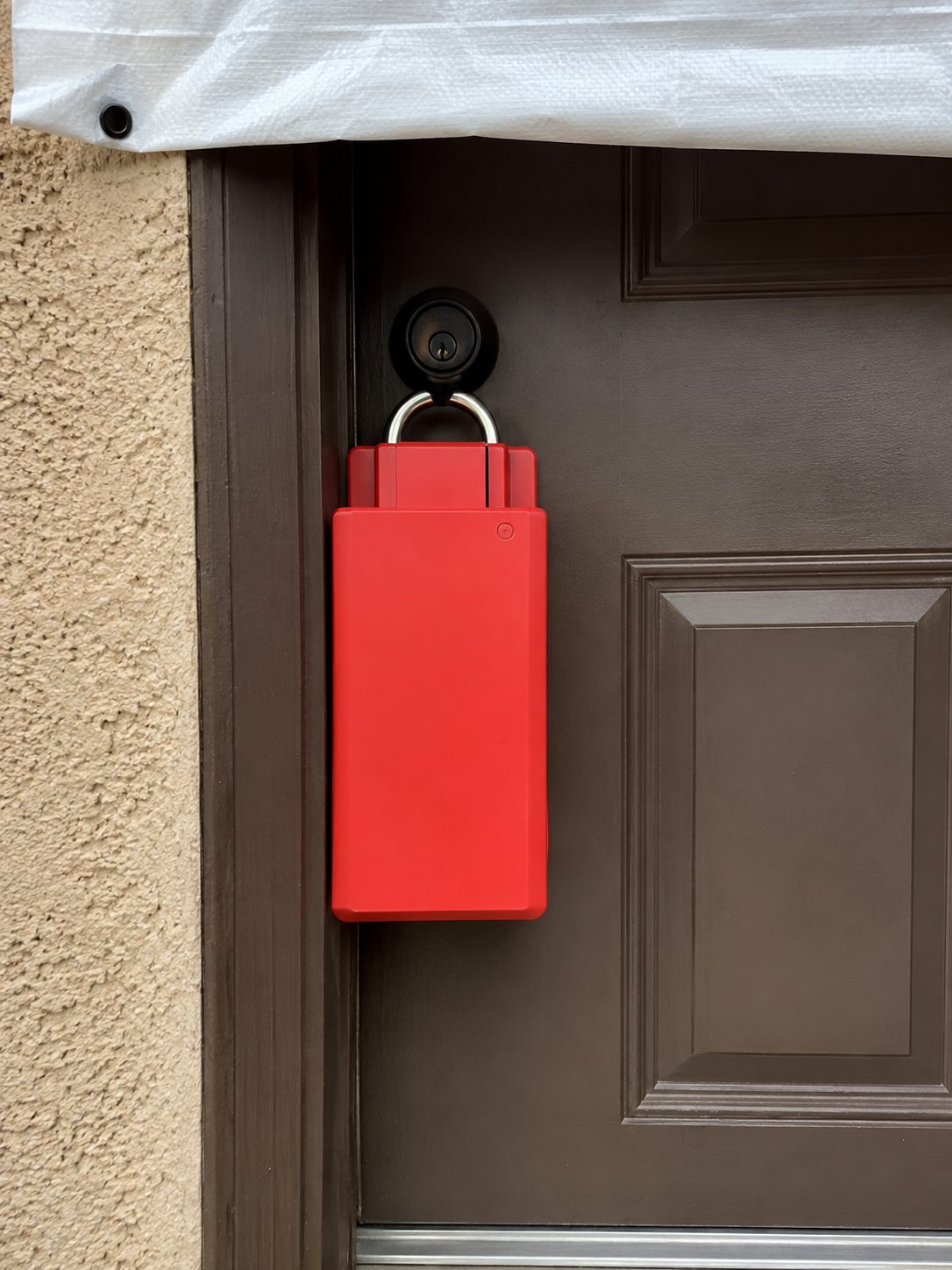
Florida law and the Vikane/Zythor product labels both require that warning signs be posted at every entrance to the structure before chloropicrin is applied and fumigant is introduced. The warning signs must meet the specific format requirements of the EPA Fumigant Risk Mitigation Measures (described in Lesson 3). Lock boxes — mechanical key-lockboxes that prevent unauthorized entry during fumigation — are required to be installed on all entry points before fumigation begins. These are not optional enhancements. A fumigation conducted without properly posted warning signs or functioning lock boxes is a federal label violation and a violation of Florida law.
Section 4: Recordkeeping Requirements
Florida Administrative Code Chapter 5E-14 establishes the specific records that must be created, retained, and made available for FDACS inspection in connection with every fumigation. The recordkeeping requirements for fumigation are more detailed than for most other pest control categories because fumigation involves a Restricted Use Pesticide and because FDACS is required to track fumigant use data for reporting purposes.
Required Records for Each Fumigation
A complete fumigation file must include:
- Signed fumigation contract — executed before work begins
- Pre-fumigation customer preparation checklist — signed by occupant
- Dosage calculation worksheet — showing structure volume, temperature adjustment, dosage in ounces per thousand cubic feet, and total quantity of fumigant introduced
- Concentration monitoring log — readings taken at required points during the exposure period, recorded by time and location
- Clearance certificate — signed by the certified operator, stating the clearance readings taken at each monitoring point and confirming the structure meets the re-entry standard
- Fumigant purchase and usage records — quantity purchased, quantity used per job, remaining inventory (required for Restricted Use Pesticide accountability)
- FDACS application record — the standard pest control application record required for all pesticide applications under Rule 5E-9.032, including the EPA registration number of the fumigant, the date, the site address, the target pest, the quantity applied, and the name and license number of the applicator
- FDACS Fumigation Log (Form FDACS-13000 or equivalent) — Florida's structural fumigation record form, recently updated to capture all label-mandated entries including the state notification confirmation number, fumigant introduction time, half-time and end-of-exposure concentration readings, aeration start time, clearance readings at every monitoring point, the EPA-tested clearance device used, and the certified operator's signature. FDACS accepts company-developed records in place of the FDACS-13000 form so long as every mandated data element is captured. Many operators choose to use the state form directly to avoid omission errors.
Retention Period
Fumigation records must be retained for a minimum of four years from the date of application. This retention period is longer than the two-year retention period applicable to most other pesticide applications and reflects the potential for delayed health complaints and FDACS audit activity. Records must be stored in a manner that allows them to be retrieved and provided to FDACS inspectors within a reasonable time — FDACS may request records during an inspection without advance notice.
Restricted Use Pesticide Requirements
Sulfuryl fluoride (the active ingredient in Vikane and Zythor) is classified as a Restricted Use Pesticide (RUP) under FIFRA. This federal designation has significant practical consequences:
- Sulfuryl fluoride may only be purchased by a licensed pest control business with an active Category 7 certified operator on staff
- Records of all RUP purchases must be maintained and are subject to EPA and FDACS audit
- RUP inventory must be stored in a secure location inaccessible to unauthorized persons
- Loss, theft, or release of RUP inventory must be reported to FDACS
- Cylinders must be tracked by lot number and weight — empty cylinders must be returned to the supplier in compliance with EPA regulations on disposal
- Signed contract before work begins — no exceptions
- Pre-fumigation preparation checklist signed by occupant — confirms evacuation and food/plant/pet removal
- Dosage calculation worksheet — volume, temperature, dosage rate, total quantity
- Concentration monitoring log — readings at each monitoring point, recorded by time
- Clearance certificate — signed by certified operator, reading at each point, date/time, confirms re-entry standard met
- FDACS application record — standard pest control record including EPA reg. number, site address, applicator name and license
- RUP purchase and usage records — quantity per job, remaining inventory
- Retain all records minimum 4 years
- Records must be available to FDACS inspector on request without advance notice
Section 5: FDACS Enforcement, Violations, and Penalties
FDACS enforces Chapter 482 through a combination of routine inspections, complaint investigations, and targeted audits. Fumigation operations are subject to particularly close scrutiny because of the public safety implications. Understanding what FDACS inspectors look for — and what violations carry the most serious consequences — helps certified operators build practices that are legally defensible.
Common Fumigation Violations
Based on FDACS enforcement history, the most frequently cited violations in fumigation operations include:
- Missing or incomplete warning signs — warning signs that are too small, posted at only some entrances, or removed prematurely
- Inadequate lock boxes — lock boxes that can be bypassed without the key, or lock boxes not installed on all entry points
- Incomplete tenting/sealing — gaps in the tent that allow gas to escape and create dangerous ambient concentrations in adjacent areas
- Premature clearance — certifying that a structure has met clearance standards without adequate testing, or re-admitting occupants before clearance testing is complete
- Missing dosage documentation — no written dosage calculation or monitoring log
- Unsigned or missing contract — beginning work without an executed contract
- Employee ID violations — employees on-site without current ID cards, or performing work outside their licensed category
- Label violations — applying fumigant at rates or under conditions not authorized by the EPA-registered label
Disciplinary Actions and Fines
FDACS has authority to take a range of disciplinary actions against pest control licensees for violations of Chapter 482 and FAC Chapter 5E-14. The severity of the penalty generally reflects the severity of the violation and whether the violation created actual risk of harm to persons or the public.
| Violation Type | Typical Consequence |
|---|---|
| Minor recordkeeping deficiency (no prior violations) | Written warning or administrative fine ($100–$500) |
| Missing contract elements | Administrative fine ($250–$1,000); corrective action plan |
| Missing warning signs or lock boxes | Administrative fine ($500–$2,500); potential suspension |
| Premature clearance / improper re-entry | Suspension or revocation; referral to EPA; civil liability |
| Applying fumigant without a Category 7 certified operator | License revocation; criminal referral possible |
| Repeat or pattern violations | Escalating fines; license suspension or revocation |
In addition to FDACS administrative penalties, fumigation violations can expose a pest control company to federal EPA enforcement (because fumigants are Restricted Use Pesticides subject to FIFRA oversight), civil litigation by injured parties, and criminal prosecution in cases of gross negligence or willful violations that result in injury or death.
Every fumigation must be performed in strict compliance with the EPA-registered label of the fumigant being used. The Vikane (sulfuryl fluoride) label, for example, specifies minimum dosage rates, required monitoring procedures, clearance standards, required warning agent (chloropicrin) use, PPE requirements, and re-entry intervals. Deviating from any of these label requirements is a federal FIFRA violation as well as a Florida Chapter 482 violation. The certified operator cannot authorize an employee to act contrary to the label, and following an employer's instruction does not shield an employee from personal liability for a label violation.
Section 6: Financial Responsibility and Insurance
Florida pest control companies performing fumigation must maintain proof of financial responsibility on file with FDACS. For fumigation operations — which carry higher liability exposure than most pest control work — this typically means maintaining comprehensive general liability insurance with limits appropriate to the scale of the business, as well as applicator's liability coverage specifically endorsed for fumigation operations.
A lapse in financial responsibility (cancelled or non-renewed insurance without replacement coverage) requires the company to notify FDACS immediately and to cease fumigation operations until coverage is restored. Performing fumigation without required financial responsibility in place is a separate and additional violation of Chapter 482, independent of any other compliance issues.
Fumigation insurance policies typically exclude incidents that result from violations of the product label, failure to follow regulatory requirements, or intentional misconduct. This means that a pest control company that corners a certified operator into taking shortcuts to save time, and then suffers a liability claim, may find its insurance coverage disputed or denied. The only reliable protection against catastrophic liability is strict compliance with every legal and label requirement on every fumigation — no exceptions.
- Category 7 certified operator directing and supervising the fumigation
- All employees on-site carrying current FDACS ID cards for the Fumigation category
- State notification submitted at least 24 hours before fumigant release
- Signed customer contract with all required elements, delivered before work began
- Written occupant preparation checklist — signed confirmation that structure is vacated, food/plants/pets removed
- Adjacent property notification completed (minimum 24 hours in advance for multi-unit settings)
- Warning signs posted at every entrance — meeting EPA format requirements
- Lock boxes installed on every entry point
- Gas and electric utilities notified / pilot lights extinguished / gas shut off at meter
- Dosage calculation worksheet completed and signed before gas introduction
- Chloropicrin (warning agent) applied per label requirements
- FDACS-13000 Fumigation Log (or equivalent company record) prepared and ready to capture every required entry
Section 7: Where to Go for Authoritative Updates
This course summarizes Florida fumigation law and product-label requirements as of the date the course was written. Florida statute, Florida Administrative Code, and the EPA-registered Vikane and Zythor labels can be amended at any time — and recent years have seen meaningful changes to active aeration time, the fumigation log format, and label-mandated training. For binding, current guidance, refer to these primary sources:
- FDACS Bureau of Entomology and Pest Control — (850) 617-7997. The Bureau enforces Chapter 482 and Rule 5E-14 and is the binding source for any Florida compliance question.
- EPA Sulfuryl Fluoride page — www.epa.gov/ingredients-used-pesticide-products/sulfuryl-fluoride. EPA hosts the current Stewardship Plans, EPA-tested clearance device list, the Sulfuryl Fluoride Site-Specific Structural Fumigation Site Log template, and any label-related updates.
- University of Florida Florida Fumigation Manual — flrec.ifas.ufl.edu/florida-fumigation-manual. UF/IFAS publishes a regularly updated comprehensive fumigation manual that is used as a reference text for the state exam. Version 2.2 of the 2021 manual was released in January 2025 and is available as a free PDF download.
- UF School of Structural Fumigation — an in-person fumigation training school held in November and February each year at the UF/IFAS Fort Lauderdale Research and Education Center in Davie, Florida. Highly recommended for new fumigators and for those preparing for the state exam. Contact through the UF/IFAS Davie campus directly.
- Current Vikane and Zythor product labels — available from Douglas Products and Ensystex II respectively. The label is the law; every fumigation must be performed in strict compliance with the current label, not the label that was in effect when training was completed.