
A thorough, systematic WDO inspection is both a professional obligation and a legal requirement in Florida. An inspection that misses active infestation — or fails to document inaccessible areas — creates serious liability exposure for the inspector and the company.
Equipment
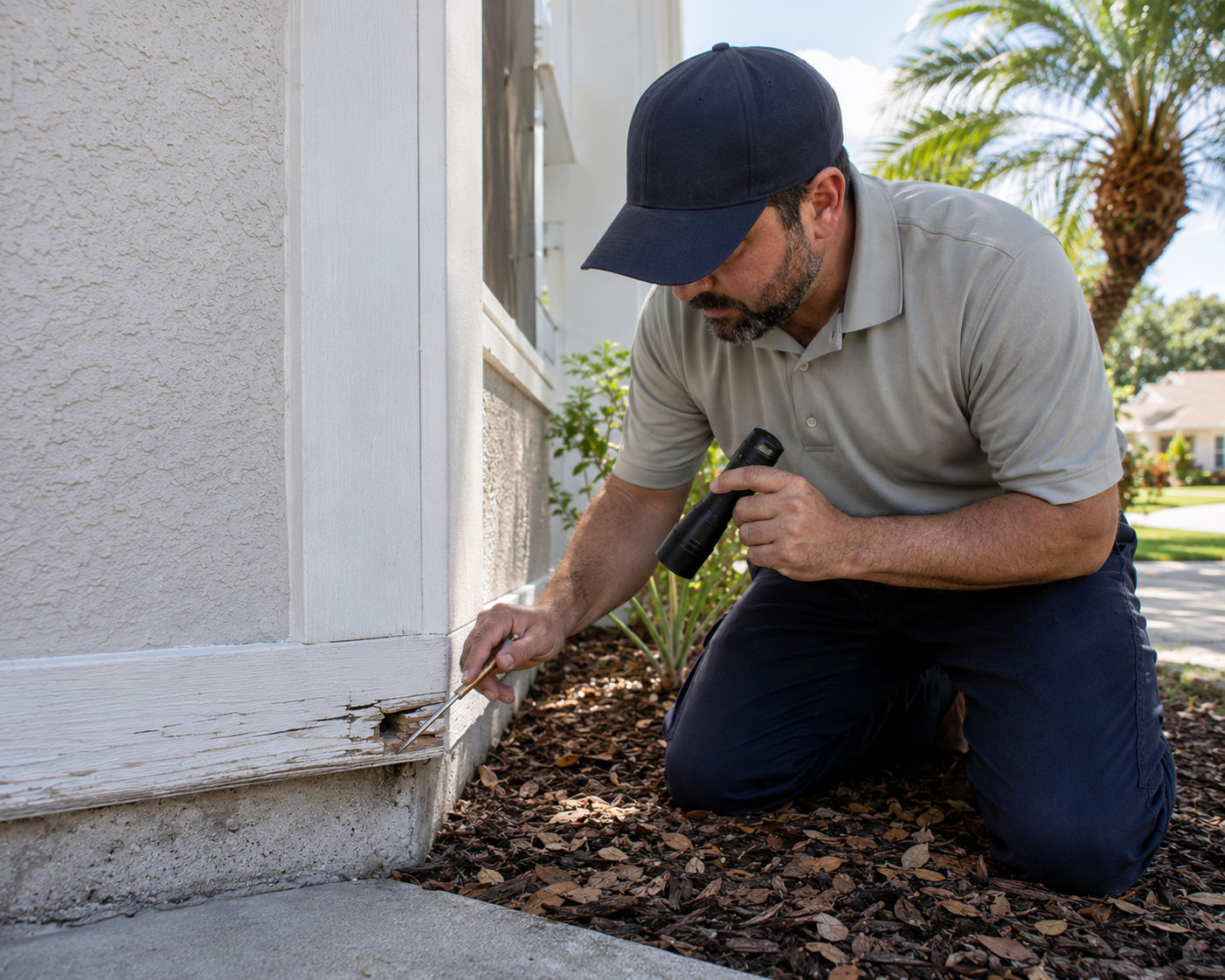
Every WDO inspector should carry: a flashlight (a headlamp is preferred for crawlspace work, keeping both hands free), a probing tool (screwdriver, awl, or dedicated sounding pick), a clipboard with WDO-IR forms, a moisture meter, and a ladder appropriate for the structure. A moisture meter is particularly valuable for identifying elevated wood moisture in areas where fungal decay or dampwood termite activity is suspected.
Exterior Inspection Protocol
Begin the exterior inspection at one corner of the structure and proceed systematically around the entire perimeter. Inspect at grade level: look for mud tubes emerging from the soil adjacent to the foundation, at expansion joints in concrete slabs, at weep holes in brick veneer, and at any wood-to-soil contact. Probe all wood that is at or within 6 inches of grade. Inspect wood debris, form boards, landscape timbers, and tree stumps within the property — these serve as harborage and food sources that sustain subterranean termite colonies near the structure. Check all exterior wood trim, window and door frames, and the lower courses of siding for evidence of moisture damage, soft spots, or frass.
Inspect foundation vents for adequate clearance and screening. Check the area under porches, stoops, and attached structures. Inspect any attached wooden fencing, decking, or trellises that may provide a bridging route for termites between the soil and the structure. Note any soil grading that allows water to drain toward the structure rather than away from it.
Interior Inspection Protocol
In slab-on-grade construction, focus inspection attention on interior perimeter walls, areas around plumbing penetrations through the slab (particularly in bathrooms, kitchens, and laundry rooms), expansion joints, and any cracks in the slab or foundation walls that could serve as termite entry points. Probe all interior wood trim, door frames, and baseboards in the perimeter rooms. Tap wood surfaces — a hollow sound indicates gallery excavation below the surface.
In pier-and-beam or crawlspace construction, a thorough crawlspace inspection is mandatory. Inspect all visible structural wood for mud tubes, galleries, and damage. Probe any wood showing discoloration or staining. Check pier bases and wood beam ends where they rest on piers for moisture and termite activity. Assess crawlspace ventilation — inadequate ventilation is one of the most common conducive conditions in Florida crawlspace construction. Measure the clearance between the bottom of the floor joists and the ground — the standard requirement is a minimum of 18 inches.
Attic inspections should be performed when safely accessible. Check the underside of the roof sheathing for moisture staining, mold, and evidence of drywood termite fecal pellets. Probe wood members at the eaves, at roof valleys, and at any areas showing discoloration. Look for drywood termite kickout holes and pellet accumulations on top of horizontal surfaces like top plates and beam surfaces.
Common Conducive Conditions to Document
Beyond active infestation evidence, Florida WDO inspectors must identify and document conducive conditions. Common conducive conditions in Florida include:
- Wood-to-soil contact at structural framing, form boards, or wood debris
- Inadequate or blocked crawlspace ventilation
- Gaps or cracks in the foundation
- Grade sloping toward the structure (negative drainage)
- Wood decks or steps attached to the structure without proper standoff gaps
- Irrigation systems watering against the foundation
- Plumbing leaks creating moisture in wall cavities
- Stucco extending to or below grade
- Foam insulation board attached directly to the foundation (can conceal mud tubes)
- Was the inspection conducted in a systematic, room-by-room and perimeter-complete manner?
- Were all accessible areas inspected, and all inaccessible areas explicitly documented with reason?
- Was visible damage noted — and was a distinction made between active and previous infestation?
- Were conducive conditions noted in the report with recommendations for correction?
- Was the inspector qualified (licensed) and carrying their employee ID card?
- Was the WDO-IR completed fully and provided to the client or ordering party?
- Are there photographs or other documentation supporting the findings?
Section 8: Termite Treatment Methods
Selecting the correct treatment method requires matching the biology of the species present, the construction type of the structure, the extent of infestation, the customer's tolerance for treatment disruption, and the regulatory requirements of the treatment method.
Liquid Soil Termiticides
Liquid soil treatment creates a chemically treated zone in the soil surrounding and beneath a structure that eliminates termites attempting to enter from the soil. This is the most commonly used treatment method in Florida and is appropriate for subterranean termite species.
Non-Repellent Termiticides — The Standard of Care
Non-repellent liquid termiticides are undetectable to termites. Workers move freely through treated soil zones, pick up a lethal or sublethal dose, and carry the active ingredient back to the colony through trophallaxis, spreading the effect to workers, soldiers, and reproductives that never contacted the treatment zone.
Fipronil (Termidor SC, Taurus SC) is the most widely used non-repellent termiticide in Florida. Its "transfer effect" — the spread of fipronil through colony trophallaxis — makes it effective at colony elimination rather than just suppression. Application requires trenching along the exterior foundation, treatment of any soil penetrations (plumbing, expansion joints), and interior treatment in key areas for slab construction.
Chlorantraniliprole (Altriset) is a diamide insecticide with an excellent environmental and non-target safety profile. It acts as a muscle paralyzer in termites. Termites exposed to treated soil stop feeding almost immediately (protecting wood from further damage) but die slowly, allowing for extended transfer through the colony.
All liquid soil termiticide applications must be made in strict accordance with the product label — including minimum application rates per linear foot, required application methods for different construction types, setback distances from water features, and notification requirements. A continuous treated zone with no gaps is essential — gaps in the treatment allow untreated soil pathways that termites will find and exploit.
Termite Bait Systems
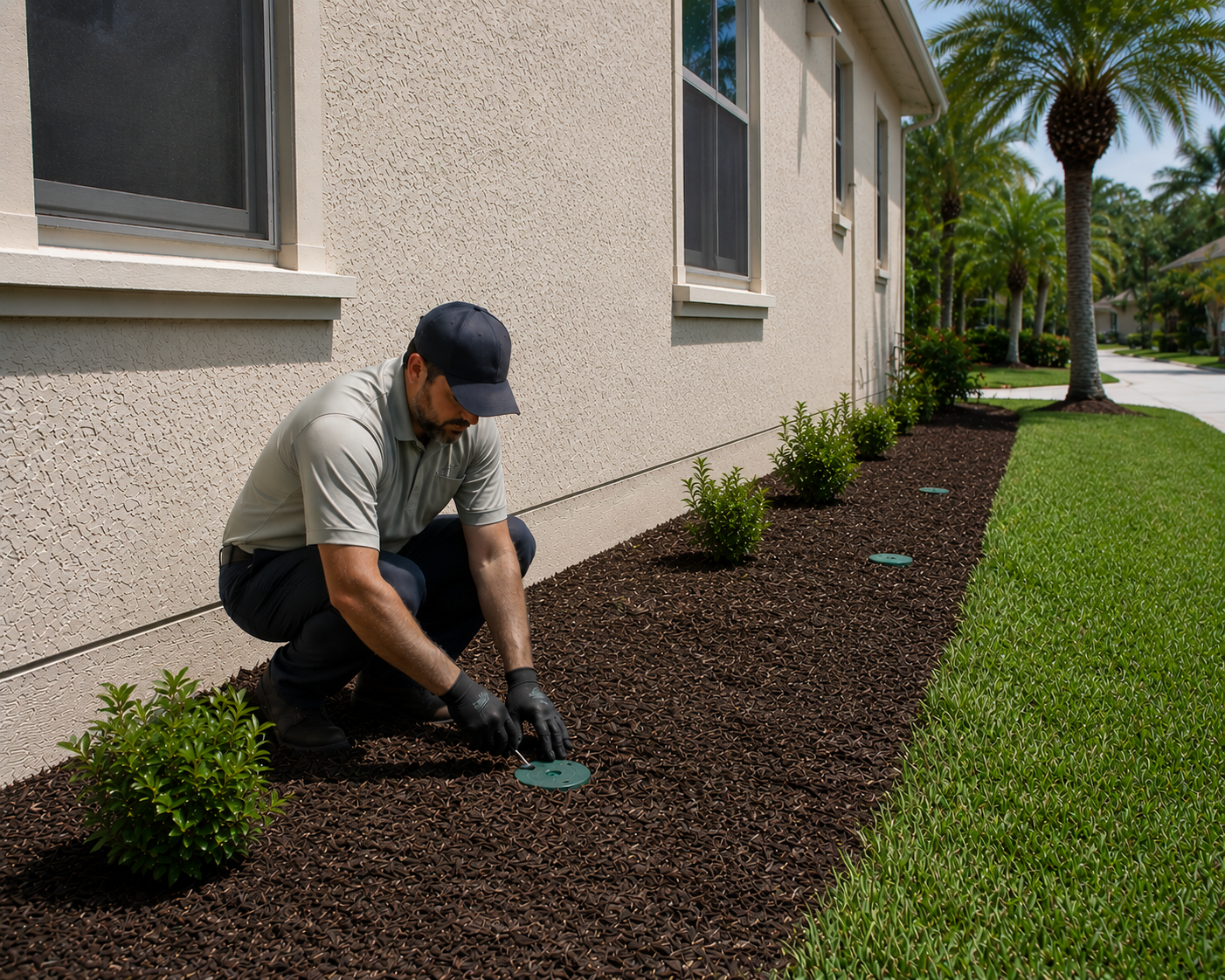
Termite bait systems target the worker caste directly and are designed to eliminate entire colonies rather than simply exclude termites from a structure. Bait stations are installed in the soil around the perimeter of the structure at regular intervals (typically 10 to 20 feet apart).
Active bait contains an insect growth regulator (such as noviflumuron or hexaflumuron) or a non-repellent active ingredient that disrupts molting or is otherwise lethal to termites at sublethal exposure levels. Workers that find the bait bring it back to the colony through trophallaxis. Because the active ingredient acts slowly, workers continue to visit the bait station and transfer material to other colony members before the station is depleted, maximizing colony exposure.
Sentricon with Always Active is the most commonly used bait system in Florida. Every station contains active bait (noviflumuron in a cellulose matrix) from the time of installation — there is no "monitoring-only" phase. Sentricon has demonstrated colony elimination in controlled studies and is widely used for both Eastern Subterranean and Formosan infestations.
Bait systems require ongoing monitoring — typically quarterly — to assess termite activity at each station, replace depleted bait, and evaluate the progress of colony suppression.
Wood Treatment Products
Tim-bor (disodium octaborate tetrahydrate) is a water-soluble borate salt applied by brush or spray to bare, unfinished wood. It penetrates the wood surface and moves inward as wood absorbs moisture. Tim-bor is effective against drywood termites, subterranean termites, wood-decaying fungi, and wood-boring beetles.
Boracare (disodium octaborate tetrahydrate in a glycol carrier) uses a glycol solvent system that dramatically improves penetration into dry, dense wood where water-based products would not penetrate. Boracare is effective on finished or painted wood surfaces and achieves deeper penetration into structural lumber. It is the preferred choice for treatment of existing structural wood in renovations and remedial applications.
Localized Drywood Termite Treatments
For confirmed, localized drywood termite infestations, localized spot treatments provide an alternative to whole-structure fumigation. Direct wood injection of termiticide foam (Termidor foam, or borate products injected through drilled holes directly into galleries) places the active ingredient in direct contact with termites within the gallery system. Orange oil (d-limonene) requires direct contact with termites to be effective and has very limited residual activity.
| Method | Target Species | Best Use | Residual? |
|---|---|---|---|
| Liquid fipronil (soil) | Subterranean | Slab/crawlspace perimeter | Yes (years) |
| Liquid chlorantraniliprole | Subterranean | Slab/crawlspace, eco-sensitive | Yes (years) |
| Bait system (Sentricon) | Subterranean (all spp.) | Formosan, ongoing monitoring | Yes (with service) |
| Boracare / Tim-bor | Drywood, subterranean, fungi | New construction, remedial | Yes (in wood) |
| Spot/foam injection | Drywood (localized) | Confirmed limited infestations | Limited |
| Whole-structure fumigation | Drywood (all extent) | Widespread / unknown extent | No |
- University of Florida IFAS Extension. Eastern Subterranean Termite, Reticulitermes flavipes. EENY-003.
- University of Florida IFAS Extension. Formosan Subterranean Termite, Coptotermes formosanus. EENY-121.
- University of Florida IFAS Extension. Asian Subterranean Termite, Coptotermes gestroi. EENY-417.
- University of Florida IFAS Extension. West Indian Drywood Termite, Cryptotermes brevis. EENY-008.
- University of Florida IFAS Extension. Wood-Decay Fungi in Florida Structures. ENY-2018.
- Florida Department of Agriculture and Consumer Services (FDACS). Florida Statute Chapter 482 — Pest Control.
- Florida Department of Agriculture and Consumer Services (FDACS). Florida Administrative Code Chapter 5E-14.
- Florida Department of Agriculture and Consumer Services (FDACS). WDO Inspection Report (Form WDO-IR) and Instructions.
You've completed all four lessons of this course. Revisiting the objectives from the start, you should now be able to:
- Apply the Florida Chapter 482 and Rule 5E-14 requirements that govern WDO inspections, reports, contracts, and recordkeeping.
- Describe termite biology and caste structure and explain how it informs treatment choices.
- Identify Florida's subterranean and drywood termite species, wood-destroying beetles, and wood-decaying fungi, and the conditions that favor them.
- Perform a WDO inspection and select appropriate treatment methods, including soil termiticides, baits, borates, and fumigation.
Complete the quiz to confirm your grasp of these objectives and earn your FDACS-13325 Record of Attendance.